
Yitzhak Y. Melamed
Charlotte Bloomberg Professor of Philosophy
Contact Information
- [email protected]
- Curriculum Vitae
- Gilman 274
- Mondays 3:30 pm to 4:30 pm and by appointment
- 410-516-0568
- Personal Website
Research Interests: Early modern philosophy; German idealism; metaphysics; political philosophy
Education: PhD, Yale University
I am a professor in the Department of Philosophy at Johns Hopkins University. I hold an MA in philosophy and the history of science and logic from Tel Aviv University, and a PhD in philosophy from Yale University (2005). I have been awarded the Fulbright, Mellon, and American Academy for Jewish Research Fellowships. Recently, I have also won the ACLS Burkhardt (2011), NEH (2010), and Humboldt (2011) fellowships for my forthcoming book on Spinoza and German Idealism.
I work at the intersection of philosophy (primarily metaphysics), Jewish and religious studies, the history of science, and the humanities in general. I focus on foundational questions, which I aspire to approach with both philosophical and historical rigor. In particular, I am interested in well-argued views that are commonly treated as “counter-intuitive”; such views, I think, may help us challenge our own well-fortified beliefs, force us to motivate what we deem to be obvious, and reveal our conceptual blind spots. To that end, I study bold past philosophers (e.g., Spinoza), and less familiar theoretical analyses (e.g., Rabbinic thought), which may not only expand our philosophical imagination, but also help us develop a more inclusive attitude to philosophy and its history. I have written a brief manifesto outlining my philosophy for the history of philosophy (“Charitable Interpretations and the Political Domestication of Spinoza, or, Benedict in the Land of the Secular Imagination”).
My first book—Spinoza’s Metaphysics: Substance and Thought (Oxford University Press, 2013) —- offers a new and systematic interpretation of the core of Spinoza's metaphysics. If my chief claims in this book are accepted, it should result in a major revision of our understanding of Spinoza (and the unfolding of an original metaphysics of thought).
In my next major book project, Spinoza and German Idealism: A Metaphysical Dialogue, I attempt to reconstruct the philosophical dialogue between Spinoza and the German Idealists. This dialogue, I argue, has shaped the modern discourse on some of the most fundamental questions of the past two centuries: the possibility of human freedom and agency, the nature of God, the veracity and adequacy of teleological explanations, the illusory nature of our perception of the world as human-centered, the rights of the State and its citizens, the nature of religion, the nature of thought, the nature of time, the value of beauty, and the limits of human thought. On each of these questions Spinoza and the German Idealists had utterly opposed views, while still sharing substantial common ground. This fruitful dialogue has crucial implications for many branches of the humanities and the social sciences, from religious studies, to aesthetics, narratology, the study of time, political theory, German intellectual history, modern Jewish and Christian thought, historiography, biblical criticism, and the history of science.
I am also about to complete a manuscript for a book on Spinoza’s political and religious thought. In this book, I articulate Spinoza’s uncompromising critique of anthropocentrism and study his delicate and critical dialogue with medieval Jewish sources (philosophy, biblical commentaries, and, to a certain extent, Kabbalah). I also criticize the common tendency to associate Spinoza with secularism. Instead of domesticating Spinoza by making him a twenty-first-century liberal-democrat (like us), I suggest that we should carefully examine his highly sophisticated political realism, with all of its blind spots, insights, vices, and virtues.
In addition to these monographs, I have edited two volumes: Spinoza’s Theological Political Treatise: A Critical Guide (Cambridge University Press, 2010; coeditor: Michael Rosenthal), and Spinoza and German Idealism (Cambridge University Press, 2012; coeditor: Eckart Förster). I am currently editing a volume on the history of the concept of eternity for Oxford University Press. I have also been invited to edit two other books: a Handbook of Jewish Philosophy for Oxford University Press, and a Critical Guide to Spinoza’s Ethics for Cambridge University Press.
I have also published a large number of shorter studies on medieval, early modern philosophy, and German idealism; about a dozen more are in press. I am currently working on issues in contemporary metaphysics (time, mereology, and identity).
To download my articles, check: http://johnshopkins.academia.edu/YitzhakMelamed.
Selected Recent Publications (see Curriculum Vitae for complete list)
Books
Spinoza's Metaphysics: Substance and Thought [in Chinese]. Translated into Chinese by Hao Dong. Beijing: Commercial Press, forthcoming (2022)
Spinoza's Political Treatise: A Critical Guide (Cambridge Critical Guides) edited by Yitzhak Y. Melamed and Hasana Sharp. Cambridge University Press, 2020.
Salomon Maimon’s Autobiography, translated by Paul Reitter. Edited and introduced by Yitzhak Y. Melamed and Abraham P. Socher. Princeton: Princeton University Press, 2019.
Spinoza’s Metaphysics: Substance and Thought. Oxford: Oxford University Press, 2013.
LA METAFISICA DI SPINOZA: SOSTANZA E PENSIERO. Translated into Italian by Emanuele Costa. Milan: Mimesis Edizioni, 2020.
Spinoza Dictionary. Oxford: Blackwell, under contract.
Edited Volumes
The Blackwell Companion to Spinoza. Ed. Yitzhak Y. Melamed. Oxford: Blackwell, in press.
Spinoza’s Political Treatise: A Critical Guide. Eds. Yitzhak Y. Melamed and Hasana Sharp. Cambridge: Cambridge University Press, 2018.
Spinoza’s Ethics: A Critical Guide. Ed. Yitzhak Y. Melamed. Cambridge: Cambridge University Press, 2017.
Eternity: A History. Ed. Yitzhak Y. Melamed. Oxford: Oxford University Press, 2016.
The Young Spinoza: A Metaphysician in the Making. Ed. Yitzhak Y. Melamed. Oxford: Oxford University, 2015.
Spinoza and German Idealism. Eds. Eckart Forster and Yitzhak Y. Melamed. Cambridge: Cambridge University Press, 2012.
Spinoza’s Theological-Political Treatise: A Critical Guide. Eds. Yitzhak Y. Melamed and Michael Rosenthal. Cambridge: Cambridge University Press, 2010.
Public Philosophy & Writing
"Spinoza, le Grand profanateur de la ‘tradition sacrée’ humaniste.” Interview with N. Weill. Le Monde. June 11th, 2020.
“God-Intoxicated Man: The Philosopher who denied the World.” Times Literary Supplement. Co-author: Clare Carlisle. May 15th, 2020.
“A Plague on the Shores of the Sea of Galilea.” The Jewish Review of Books, Summer 2020, 40-41.
“Does Eternity Have a Future?” The Philosophers’ Magazine 81 (2018): 40-44.
“Spinoza’s Metaphysics and His Relationship to Hegel and the German Idealists” An Interview with Richard Marshall. 3:AM Magazine. Dec. 30th, 2017.
Review of Salomon Maimon, Essay on Transcendental Philosophy, translated by Nick Midgley, Henry Somers-Hall, Alistair Welchman and Merten Reglitz (London: Continuum, 2010). Times Literary Supplement. Sept. 17th, 2010.
Selected Articles
“Spinoza’s causa sui” in The Blackwell Companion to Spinoza, ed. Yitzhak Y. Melamed (Oxford: Blackwell, 2021).
“Maimon’s ‘Law of Determinability’ and the Impossibility of Shared Attributes” Revue de Métaphysique et de Morale. 2021.
“Spinoza’s ‘Atheism’” in Daniel Garber (ed.), Spinoza: Reason, Religion, Politics: The Relation Between the Ethics and the Tractatus Theologico-Politicus. Oxford: Oxford University Press, forthcoming.
“Spinoza on the Value of Humanity” in Nandi Theunissen and Sarah Buss (eds.), Re-Evaluating the Value of Humanity. Forthcoming.
“Spinoza’s Metaphysics of Substance” in Don Garrett (ed.), The Cambridge Companion to Spinoza. 2nd edition. Cambridge: Cambridge University Press, forthcoming.
“Teleology in Jewish Philosophy: Early Talmudists to Spinoza” in Jeffrey K. McDonough (ed.), Teleology: A History (Oxford: Oxford University Press, 2020), 123-149.
“ ‘Deus sive Vernunft’: Schelling’s Transformation of Spinoza’s God” in G. Anthony Bruno (ed.), Schelling’s Philosophy: Freedom, Nature and Systematicity (Oxford: Oxford University Press, 2020), 93-115.
“The Enigma of Spinoza’s Amor Dei Intellectualis” in Noa Naaman-Zaudrer (ed.), Freedom, Action and Motivation in Spinoza’s Ethics. London: Routledge, 2020, 222-238.
“The Earliest Draft of Spinoza’s Ethics” in Charles Ramond and Jack Stetter (eds.), Spinoza in 21st-Century French and American Philosophy. Metaphysics, Philosophy of Mind, Moral and Political Philosophy. Bloomsbury, 2019, 93-112.
“ ‘A Substance Consisting of an Infinity of Attributes’: Spinoza on the Infinity of Attributes” in Ohad Nachtomy and Reed Wieneger (eds.), Infinity in Early Modern Philosophy. Springer, 2018, 63-75.
“Hermann Cohen, Spinoza, and the Nature of Pantheism” Jewish Studies Quarterly 25 (2018): 171-180.
“When having too much Power is Harmful? - Spinoza on Political Luck” in Spinoza’s Political Treatise: A Critical Guide, eds. Yitzhak Y. Melamed and Hasana Sharp (Cambridge: Cambridge University Press, 2018), 161-174.
“The Building Blocks of Spinoza’s Metaphysics: Substance, Attributes, and Modes” in Michael Della Rocca (ed.), The Oxford Handbook of Spinoza (Oxford: Oxford University Press, 2017), 84-113.
“The Causes of Our Belief in Free Will: Spinoza on Necessary, Innate, yet False Cognitions” in Yitzhak Y. Melamed (ed.), Spinoza’s Ethics: A Critical Guide (Cambridge: Cambridge University Press, 2017), 121-141.
“The Principle of Sufficient Reason,” The Stanford Online Encyclopedia of Philosophy, Edward N. Zalta (ed.), URL= http://plato.stanford.edu/entries/sufficient-reason/.(Co-author: Martin Lin). First published: Sept. 2010. Substantial Revision: Sept. 2016.
“Hegel, Spinoza, and McTaggart on the Reality of Time” International Yearbook of German Idealism 14 (2016): 211-234.
“Eternity in Early Modern Philosophy” in Yitzhak Y. Melamed (ed.) Eternity: A History (Oxford: Oxford University Press, 2016), 129-167.
“Method,” in the Cambridge Descartes Lexicon, ed. Larry Nolan (Cambridge: Cambridge University Press, 2016), 508-513.
“Spinoza, Benedict,” in the Cambridge Descartes Lexicon, ed. Larry Nolan (Cambridge: Cambridge University Press, 2016), 692-695. Co-author: John Brandau.
“A Glimpse into Spinoza’s Metaphysical Laboratory: The Development of Spinoza’s Concepts of Substance and Attribute” in Yitzhak Y. Melamed (ed.), The Young Spinoza (Oxford: Oxford University Press, 2015), 272-286.
“Hasdai Crescas and Spinoza on Actual Infinity and the Infinity of God’s Attributes” in Steven Nadler, Spinoza and Jewish Philosophy (Cambridge: Cambridge University Press, 2014), 204-215.
“Spinoza, Tschirnhaus et Leibniz: Qu’est un monde?” in Pierre-François Moreau, Raphaële Andrault, and Mogens Laerke (eds.), Spinoza/Leibniz. Rencontres, controverses, réceptions, (Paris, Presses universitaires de Paris, 2014), 85-95.
“What is Time?” in Aaron Garrett (ed.), The Routledge Handbook of Eighteenth Century Philosophy (London: Routledge, 2014), 232-244.
“Spinoza’s Respublica divina” in Otfried Höffe (ed.), Baruch de Spinozas Tractatus theologico-politicus (Berlin: Akademie Verlag, 2013), 177-192.
“ ‘Scientia Intuitiva’: Spinoza’s Third Kind of Cognition” in Johannes Haag & Markus Wild (eds.) Übergänge - diskursiv oder intuitiv? Essays zu Eckart Försters “Die 25 Jahre der Philosophie” (Klostermann: Frankfurt a.M. 2013), 99-116.
“Spinoza’s Metaphysics of Thought: Parallelisms and the Multifaceted Structure of Ideas,” Philosophy and Phenomenological Research 86 (2013), 636-683.
“Charitable Interpretations and the Political Domestication of Spinoza, or, Benedict in the Land of the Secular Imagination” in Eric Schlisser, Mogens Laerke and Justin Smith (eds.), The Methodology of the History of Philosophy (Oxford: Oxford University Press, 2013), 258-279.
“Spinoza’s Deification of Existence” Oxford Studies in Early Modern Philosophy 6 (2012),75-104.
“ ‘Omnis determinatio est negatio’ – Determination, Negation and Self-Negation in Spinoza, Kant, and Hegel” in Eckart Förster and Yitzhak Melamed (eds.), Spinoza and German Idealism (Cambridge: Cambridge University Press, 2012), 175-96.
“The Sirens of Elea: Rationalism, Idealism and Monism in Spinoza” in Antonia LoLordo and Stewart Duncan (eds.), The Key Debates of Modern Philosophy (New York and London: Routledge. 2012), 78-90.
“Inherence, Causation, and Conception in Spinoza” Journal of the History of Philosophy 50 (2012), 365-86.
“Why Spinoza is Not an Eleatic Monist (Or Why Diversity Exists)” in Philip Goff (ed.), Spinoza on Monism (London: Palgrave, 2012), 206-22.
“’Christus secundum spiritum’: Spinoza, Jesus, and the Infinite Intellect” Neta Stahl (ed.), The Jewish Jesus (New York: Routledge, 2012), 140-151.
“« Et revera »: Spinoza, Maïmonide et la signification du Tétragramme» in Frédéric Manzini (ed.) Spinoza et les scolastiques (Paris: PUPS 2011), 133-47.
“Crescas, Hasdai” in Judith Baskin (ed.), The Cambridge Dictionary of Jewish History, Religion, and Culture (Cambridge: Cambridge University Press, 2011), 120-121.
“The Metaphysics of Spinoza’s Theological Political Treatise”, in Melamed and Rosenthal (eds.), Spinoza’s Theological-Political Treatise: A Critical Guide (Cambridge: Cambridge University Press, 2010), 128-42.
“Acosmism or Weak Individuals? Hegel, Spinoza, and the Reality of the Finite”, Journal of the History of Philosophy 48 (2010), 77-92.
“Spinoza’s Anti-Humanism: An Outline” in Carlos Fraenkel, Dario Perinetti, and Justin Smith (eds.) The Rationalists (Kluwer – New Synthese Historical Library: 2010), 147-66.
“Spinoza’s Metaphysics of Substance: The Substance-Mode Relation as a Relation of Inherence and Predication”, Philosophy and Phenomenological Research (78:1) January 2009, 17-82.
“Salomon Maimon et l’échec de la philosophie juive moderne,” Revue germanique internationale 9 (2009) (Haskala et Aufklärung – Philosophes juifs des Lumières allemandes), 175-87.
“Inherence and the Immanent Cause in Spinoza”, The Leibniz Review 16 (2006), 43-52.
“Salomon Maimon and the Rise of Spinozism in German Idealism,” Journal of the History of Philosophy 42 (January 2004), 67-96.
“Salomon Maimon”, The Stanford Online Encyclopedia of Philosophy, Edward N. Zalta (ed.), URL= http://plato.stanford.edu/archives/maimon/ (co-author: Peter Thielke). January 2002. Substantial Revisions: July 2007, July 2015, September 2019.
“The Exact Science of Non-Beings: Spinoza's View of Mathematics", Iyyun - The Jerusalem Philosophical Quarterly 49, January 2000, 3-22

A Companion to Spinoza
editor
Wiley ,
2021
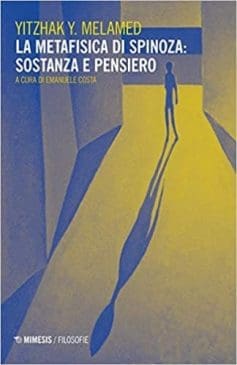
La metafisica di Spinoza: sostanza e pensiero (Italiano)
author
,
2020
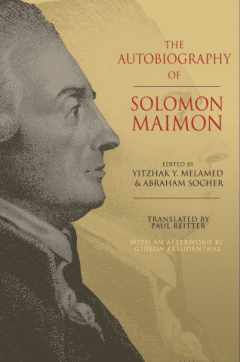
The Autobiography of Solomon Maimon
editor
Princeton University Press ,
2018
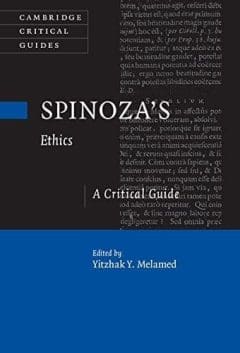
Spinoza’s Ethics: A Critical Guide
editor
Cambridge University Press ,
2017
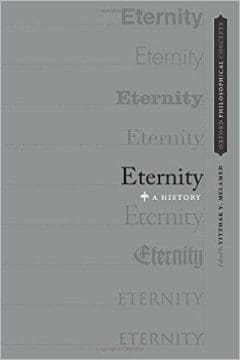
Eternity: A History
editor
Oxford University Press ,
2016
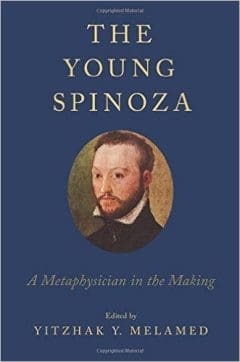
The Young Spinoza: A Metaphysician in the Making
editor
Oxford University Press ,
2015
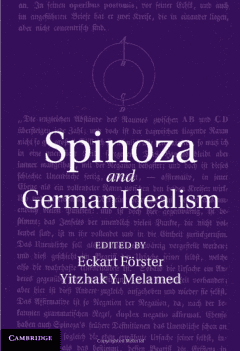
Spinoza and German Idealism
editor
(with Yitzhak Y. Melamed, editor)
Cambridge University Press ,
2012
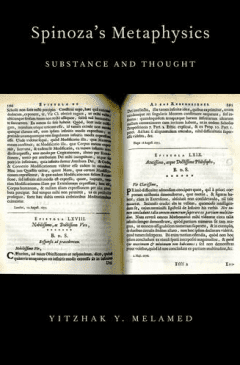
Spinoza’s Metaphysics
author
Oxford University Press ,
2013
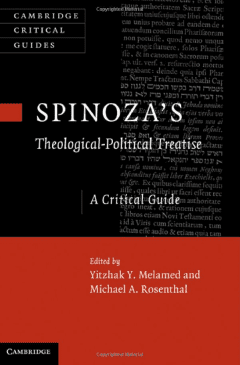
Spinoza’s Theological-Political Treatise: A Critical Guide
co-editor
Cambridge University Press ,
2010